Environmental Law in Government: Managing Competing Interests and Natural Resources
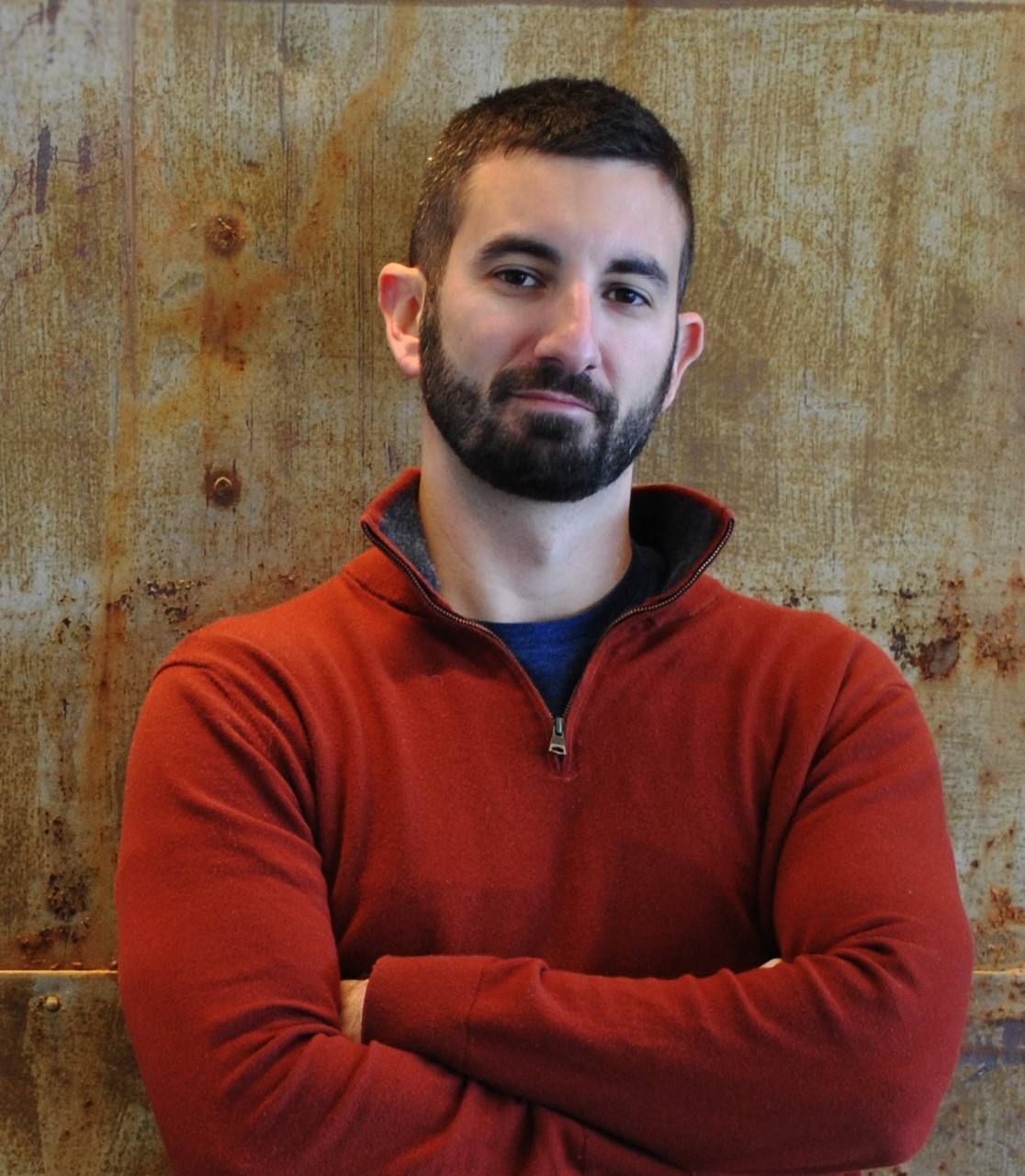 Kyle McEntee
Duncan Kemp, a state government lawyer, took an unconventional path to environmental law. After working in college athletics fundraising and earning an MFA in Creative Writing, he entered law school part-time with a clear goal: protecting natural resources. But landing that environmental job proved harder than expected. Today, he manages litigation for one of Louisiana's largest landowners—from boundary disputes and coastal erosion cases to pipeline enforcement and exotic animal seizures. Duncan discusses balancing conservation with hunting traditions and economic growth, and coordinating litigation across agencies. Plus, he talks about the satisfying trade-off between lower government pay and a better work-life balance. Duncan is a graduate of Southern University Law Center.
Transcript
Kyle McEntee:
We're joined today by Duncan Kemp, Deputy General Counsel at the Louisiana Department of Wildlife and Fisheries, which is responsible for managing and protecting Louisiana's natural resources. You came to the idea of a legal career later in life, and environmental law is the reason you decided to go to law school. Take me back to your prior career and when you were charting that new path. What did you imagine yourself doing after law school?
Duncan Kemp:
Prior to going to law school, I worked at a nonprofit that raises money for college athletics for LSU, Louisiana State University. It was a fun job. I got to see a lot of the inner workings of a major college football program.
But I've always had a desire to appreciate and help the natural world. Before I worked at what's called the Tiger Athletic Foundation, I got a Master’s in Fine Arts and Creative Writing. My thesis project was actually a novel. It had to do a lot with what I work on today, actually, land rights, ecology, disputes between government and individuals, stuff like that. It was always something that I wanted to do, not necessarily the legal part, but the environmental work coming from an English background in school and not so much the sciences or biological sciences just seemed like the natural thing to do, to pursue. So as I was at Tiger Athletic Foundation, doing that, I was also clerking for the Sea Grant Law and Policy Program and going to law school part-time.
Kyle McEntee:
Did you know before you started law school that it might take a little while to land that job that you wanted?
Duncan Kemp:
No, I had no idea.
Kyle McEntee:
When did you learn that would be the case?
Duncan Kemp:
Soon after. So I graduated, I took the bar, and I started looking for jobs. As I was going on, I clerked for a judge. I talked to a few professionals who do environmental law down here in Louisiana on the plaintiff's side, I should say, and on the government side. It started getting a bit disheartening, actually, when I had to hear their stories of what they had to do. It was eye-opening to see how difficult it might be to get into this particular field.
Pretty much, I wasn't in a situation where I could be very picky. I had a baby daughter, and I just had to start work again, really. And so that first job was with an insurance defense firm. Great relationship, great people, but it really wasn't what I wanted to do with my law degree.
Kyle McEntee:
We have you on the show today because you're doing the work you actually set out to do, even if it took you a while to get there. Tell me about the transition from private practice to governmental work.
Duncan Kemp:
So, not the insurance defense firm, but at a smaller firm. After I think about a year working there, it just became very clear to me that that's not what I wanted. And in the meantime, I had networked while I was at that firm, and I became professional colleagues with an individual who was chief of Lands and Natural Resources section at the AG's office.
I took him to lunch and told him what my background was and that I was looking, and I was looking. And I would email and call him on a regular basis while I was at that firm. I left that firm in January. I did some contract work for another firm. And in February of 2014, I finally got the call after months, maybe even a year of bothering this guy. He said that they wanted to hire me, and so that was a great day. I mean, the pay was nowhere near what I was making at the firm. But I was working with a group of great, passionate people who cared about public lands and natural resources, and it was an incredibly rewarding experience, even though the income took a hit.
Kyle McEntee:
Yeah, it's a pretty common trade-off. I think a lot of new lawyers are making, or at least they're making it a few years into their career, trying to do the work that they want to do and maybe not getting paid as much as they'd prefer. What were you thinking about when you were deciding, yeah, I can justify this pay cut?
Duncan Kemp:
Well, I'm also very fortunate that my wife is very supportive and brilliant, and brilliant enough to see that I was a much better guy to be around when I was working on things that I enjoyed. Any financial struggles at that time were outweighed by the overall positivity that was occurring doing environmental law.
Kyle McEntee:
All right, so let's fast forward five years. You take a job at the Department of Wildlife and Fisheries, and I said at the top of the episode that this is a governmental agency that exists to manage and protect natural resources. So big picture, what sort of work does the agency do?
Duncan Kemp:
We do a lot of acquisitions of land for public recreation and public use. That may sound a little boring, but in reality, it's important to have these lands and to maintain these lands for the public good and public trust. We acquire land for these purposes. We manage it, we protect it, we strive to replenish the natural resources on the land and by natural resources in this context, primarily wildlife and fisheries and fishes. We also enforce the laws and the regulations that are in place to fulfill our mission. So we have what we call enforcement agents, also known as game wardens, who go out and make sure people are following the rules and not taking game and fish beyond what the law allows.
Kyle McEntee:
So it's like a fish has to be a certain size, a deer has to be at a particular time, that sort of thing?
Duncan Kemp:
Yeah. So it could be a lot of different things, but yes, there's... So the amount of fish and what type of fish you take, the size of those fish, the amount of game you may take, deer, squirrel, rabbit, when you take it, how you take it, and by take, take is, I guess, something of a euphemism for kill or harvest, you know, what weapons you use for that activity. All that falls in line with our purpose of conserving, managing, and replenishing the wildlife of the state.
Kyle McEntee:
So basically people have like permissions to do certain activities. You regulate what those permissions are and then deal with enforcement actions when someone doesn't follow the rules?
Duncan Kemp:
I think as a general matter, that's fair to say, yeah. You have a hunting license, right? You have a Louisiana hunting license in this case, and that's a basic hunting license. And then if you want to go deer hunting, you need a big game license to go with your hunting license. And then you have other rules that you have to follow in order to do that appropriately, in order to take basically a public trust resource and claim it as your own. I think another way of putting it is if you fail to do these things, when you take this resource, you've taken a public trust resource illegally and therefore will have to deal with whatever the penalties may be.
Then we either seek civil fines and penalties and restitution of whatever that animal may be, or sometimes if the violation warrants criminal prosecution, then that's what we will seek. We have other issues too, potentially dangerous animals and people who possess these animals, big cats, monkeys, non-human primates, wolves.
Kyle McEntee:
The list goes on and on of what people want to have in their backyard.
Duncan Kemp:
Absolutely. That often can lead to some problems with us.
Kyle McEntee:
So based on that, there's a lot of different places for lawyers to be involved. Where do you fit in to all of this as a lawyer for the state?
Duncan Kemp:
I do deal a little bit with personal injury cases from time to time. Now, I am not the attorney that's going to court on personal injury matters, for the most part. Now, there have been a few cases here and there where just the situations just call for really in-house counsel to be more a part of the case.
But we do get personal injury lawsuits filed against us. Typically that is something where an employee is in a wildlife and fisheries truck and there's an auto accident. The other side will get an attorney and they'll send the petition or the complaint or they'll serve us with it.
And then it's up to me to contact the AG's office, the attorney general's office, make sure the state insurance company is well aware of what's happened, coordinate discovery, stuff like that. We have some mineral law issues where we have individuals on some of our properties that have had mineral leases prior to those properties becoming owned by the state agency. We have just boundary issues on some of our property that I have to deal with... a lot of contract issues. One thing I really don't deal with in my practice is HR stuff. Any kind of litigation, though outside of HR matters, any litigation that this agency has to deal with, I'm usually the contact and the manager of those cases.
Kyle McEntee:
It's interesting. It's a government agency, but it sounds like you're in-house counsel for any corporation in America. It happens that the work you're doing is environmental protection instead of selling wares.
Duncan Kemp:
I suppose what I enjoy about it is whatever the case is, there's always some level of protection of our natural resources and helping the people of our state enjoy those resources.
Kyle McEntee:
Environmental law is interesting because it's such a broad category, and it doesn't necessarily mean protecting the environment, although that's what you get to do. It's like the law related to the environment, and there's all these different stakeholders with all these different points of view of what that should look like. As a government lawyer, your view pretty much has to be aligned with the state. How does the state look at this multiplicity of views?
Duncan Kemp:
Well, I can't speak for the whole state in this context, and I can't speak for the administration, the executive branch of our state, although this is an executive agency. My impression is that when we're doing things the way that it should be done, we're balancing industry against the continuation and management of the resources. And as long as that balance is well-balanced, we're doing our job, and we're doing it correctly.
I think that sometimes, depending on what the circumstances are, that balance can get a bit out of whack. Would I like to see maybe more protection of our resources, more public spaces, more green spaces? Absolutely, but sometimes that's just not what's going to happen.
Kyle McEntee:
Yeah, I mean, it's partially a political question, right? And what's the political will of the elected officials?
Duncan Kemp:
Absolutely, and more so the people who elect those officials, right? How the state handles these environmental issues, it seeks to strike a balance, or at least that's what I do in this agency, and that's what our section here does in this agency. We strike a balance between stakeholders.
This is a job, I think, that it's not a tree hugger job. I mean, we support a lot of hunting and fishing and the consuming of these natural resources. It doesn't mean, though, that there isn't a balance to seek with regard to consuming these resources.
Kyle McEntee:
Environmental protection is complicated, and it's complicated by lots of different views. And when, ultimately, these are political questions that are resolved at a level that is not in the bureaucracy, sometimes you're just at the whims of the political winds.
Duncan Kemp:
Yeah, and there's also a lot of heritage and tradition, I think, probably not just in Louisiana, right? Hunting, trapping, fishing, those are all ways of life for a lot of people, a lot of constituents, and it's important that those things are valued and protected. But along with valuing and protecting those things comes a reasonable amount of management.
And I think sometimes that gets lost in the shuffle. Sometimes the state is seen as this overbearing, far-reaching entity that's trying to spoil everybody's fun. But actually what we're trying to do is manage the resources for not just today, but tomorrow and for other generations down the line.
Kyle McEntee:
So let's talk a little bit about the cases where you are intervening on behalf of animals that are held in captivity, cases like this I'm sure everyone wants to hear about when you're at a dinner party or a football game, because they tend to get a lot of coverage. So imagine there's a tiger in captivity. At what point before the seizure are you getting involved? Or is it only after the seizure that you're involved?
Duncan Kemp:
Typically as a lawyer, I might help advise our agents. That doesn't always happen. Oftentimes our agents will seek a warrant, seize the animal. And as soon as they feel like there's going to be a lawsuit, they let me know. At which point, it just depends. Is there already an attorney on the other side involved? I'll seek to have conversations with that attorney. Have we just been sued? Is there a petition for injunctive relief already filed? Then we got to scurry and get all that figured out. Depending on the level of litigation, I have to involve the attorney general's office, get them on board to help defend it.
And the individuals can be very passionate about what they think is their pet. And it could be an emotional case for a lot of people. So in general, that's what we deal with on those cases. We haven't had a lot of those lately.
Kyle McEntee:
But basically what's happening is, at least in some of these circumstances, someone is suing you saying, you can't take my big cat. And then you're defending the state's actions. And the state in this case is the law enforcement agents from the Department of Wildlife and Fisheries. So enforcement actions, they're exciting cases that might draw someone to this type of work. What's your caseload? Is it 10, 20 percent of the work? Is it half?
Duncan Kemp:
Right now, it's about maybe 10, if that. Just a couple of years ago, it was, I would say, 60, 75 percent. It just depends on what our enforcement agents know and when they know it, and then what happens after that. It may have just been coincidence that a few years ago, this was happening on a regular basis. And right now, it's just not happening as much.
Kyle McEntee:
Let's dig into some of these other types of cases that cross your desk. Okay. What's your role in the personal injury or workers' comp cases that you're doing?
Duncan Kemp:
Again, that's more of a litigation coordinator, manager role, just making sure that these cases are being worked by typically the ORM, Office of Risk Management, which is the state insurance agency. They will identify whatever attorney is working on that. And then I assist in making sure that that attorney has everything that they need to have for those types of cases.
Kyle McEntee:
So basically, you're your department's kind of point person on the case, and you're not doing much in the courtroom or negotiating on these matters?
Duncan Kemp:
Very rarely, but sometimes negotiating, sometimes advising outside counsel on certain things. I can remember it was an interesting case. We were being sued. This is not necessarily a personal injury. It was a civil rights violation. But this is just an example of sometimes how the specialized knowledge that occurs in this office helps inform outside counsel that ORM appoints.
So we had a case where we were being sued under the ADA, American Disabilities Act, because an individual wanted to use a weapon that was an illegal means of taking deer, an air gun that would shoot a bolt as opposed to a rifle shooting a bullet.
Kyle McEntee:
That sounds extra violent.
Duncan Kemp:
It's kind of like a crossbow, but a gun. And instead of just the limbs and the pulley system that a crossbow has, it was a cartridge that was pneumatically pressured to fire out of this gun, right? So it'd be like a bolt with a arrowhead on it, essentially.
And this individual wanted to use that as a reasonable accommodation under the Americans with Disabilities Act to take deer. We had a good litigation team. Some outside counsel from New Orleans were helping us on this. And as I was pouring over the discovery, because that's one of the things I do, is just kind of stay abreast of what's going on in the case. And if anything stands out, then I'll bring it to their attention. Well, it turns out that this particular guy who was trying to do this was in arrears on his income taxes. And if you are in arrears on your income taxes, you can't even have a hunting license. I was like, guys, this guy doesn't have a right of action against us. And it got dismissed on that issue.
Kyle McEntee:
And that makes sense because the outside counsel, they're not specialists in these laws. They are specialists in pre-trial litigation and then trial litigation. And then they need experts who can help them see around some corners.
Duncan Kemp:
Yeah, absolutely.
Kyle McEntee:
So I know the bulk of your work is related to land rights. Can you first explain what that means and then why it matters?
Duncan Kemp:
Wildlife and Fisheries is one of the largest landowners in Louisiana. But we own our property and manage our property for the public trust. Sometimes that property is subject to servitudes, mineral leases. Sometimes there may be a boundary dispute on where our property ends and where someone else's begins. Sometimes there are disputes that portions or whole tracts of land that we claim are not even ours. In Louisiana, we have a vanishing coast. And if there's a private ownership of coastal property that is eroding on the coast and becomes part of the Gulf, the land, the sea bottom of the Gulf and of lakes and rivers is owned by the state. Sometimes it's owned by this agency, depending on where that property is. But it is presumed to be owned by the state. And when it erodes and vanishes, that impacts the private landowner's property rights because that private landowner has basically just lost land that the state can now claim as part of the Gulf or Lake Pontchartrain or what have you. So those boundaries can become subject to litigation.
As an example, we have oyster leases. Individuals have these leases. They are apparently very lucrative. They're not very expensive to have these leases. But if an individual were to lose their rights on these leases, then that water bottom becomes the state's water bottom that can create a lot of conflict between public and private ownership or public and private rights.
Kyle McEntee:
So we've talked a lot about the state being sued and you being involved in defending the state. But I also know there's instances where you're leading the charge against outside entities. Can you talk a little bit about some of those cases?
Duncan Kemp:
Right now, we have a couple of cases where pipeline companies are the defendants, and we, this agency, are the plaintiffs. We are suing them for their lack of maintenance to pipeline right-of-way canals in some of our coastal properties. What's happened there is you have certain agreements, right-of-way agreements, that allow for this pipeline canal to exist, but only up to a certain width in feet. These agreements also have an obligation of the defendants to maintain that width. I'll just leave it at that. And we are suing them for that failure to maintain these canals at that width. When that width is, say, 100 feet instead of 40 feet, that perpetuates land loss.
Kyle McEntee:
And so this is not you taking an enforcement action because they're violating the law. It's you, the agency, had an agreement in place with these different companies. They broke the contract. You're enforcing the contract. And according to the contract, due damages because of their failings. And that's the litigation is like, did they violate their contract or not? Are you also involved in negotiating these agreements on the front end for, say, a company that wants some right-of-way?
Duncan Kemp:
I mean, sometimes there will be a request for a right-of-way for utilities or something like that on our property. The negotiations themselves, really, I'll leave that up to our minerals section. It's a different section altogether than that. Typically, it will come to me for approval to make sure that we're taken care of.
Kyle McEntee:
And let's say it doesn't look like you think it needs to look. What's that look like for you to go to the team that's been negotiating on behalf of the government and say, you got to rethink these provisions?
Duncan Kemp:
That's a rare thing, but that's what I'm checking for. We don't reinvent the wheel for every right-of-way agreement that we execute. There's going to be certain components to each agreement that are the same no matter what.
Indemnity, hold harmless, stuff like that, right? If for some reason something like that was left out, that's where my checking it would come in and make sure that that's in there. Very rarely would it be anything more complex or specialized than something that should be in there just got left out for whatever reason.
Kyle McEntee:
So, going back to a prior part of our conversation, you mentioned that you took a pay cut to work for the government. Have you caught up to where you were when you left private practice almost 12 years ago? And how's the work-life balance compared to what it was like before?
Duncan Kemp:
It's immeasurably positive compared to where it was before. For the past few years, I've coached my daughter's soccer team. I still go to all her games now. She's in high school and she made varsity her freshman year. And it's great that I can be there for these things for her.
When I do work late, it's usually not very late. I would say eight, nine out of 10 weekends are for my weekends. I'm not running into the office and taking care of a bunch of stuff on a Sunday, which I did a lot of back in private practice. Work-life balance has been outstanding, really.
Kyle McEntee:
And what about the work itself? Is it ultimately what you expected when you went to law school to be the environmental lawyer that you are today?
Duncan Kemp:
I really like this agency. As you mentioned before, environmental law can mean a lot of different things. Most commonly, you're dealing with chemicals, Clean Air Act, Clean Water Act, stuff like that. That's not something we really deal with here. We deal with the Endangered Species Act, Marine Mammal Protection Act, stuff like that. If we deal in the federal sphere, that is. One thing I wish I could do more of in this position is more captive wildlife cases. Maybe it's a personal passion of mine that, while the animals should indeed be wild and not in somebody's backyard, but can't make that happen. But I think the subject matter here is just really interesting.
And also working hand-in-hand with biologists and getting their feedback about whatever animals they are dealing with in their line of work, hearing statistics, hearing their recommendations for the management and protection of these animals. Lending a hand in those efforts is very rewarding.